Cloud Costs
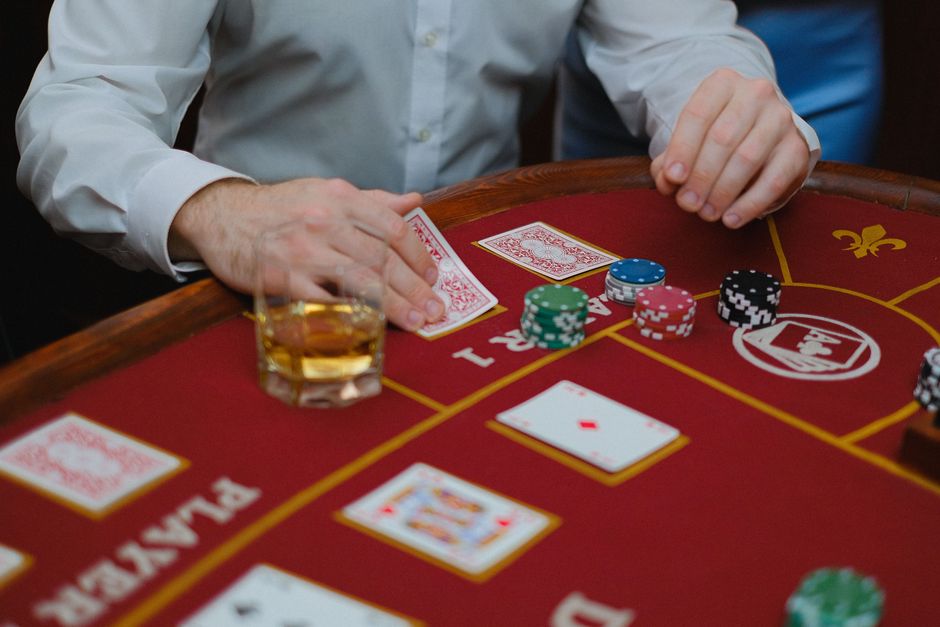
You’ve got $200 and an hour to kill. Do you spin slots, sit at a poker table, or drop it on a Premier League parlay? Most players pick based on gut feeling or whatever’s flashing on the homepage. But here’s the thing: these three verticals aren’t just different games. They’re entirely different ecosystems, each with its own math, psychology, and skill ceiling. Understanding those differences is the difference between entertainment and a slow bleed. Let’s break down what actually separates them.
Slots are the purest form of casino gambling because there’s no decision to make beyond bet size and spin speed. You pull the lever (or tap the button), and a random number generator does the rest. That simplicity is also why slots consistently generate 70–80% of casino revenue on the Las Vegas Strip. Players aren’t comparing odds; they’re buying volatility and hope.
Here’s the math that matters. A typical slot machine has a return-to-player (RTP) between 92% and 97%. That means for every $100 you cycle through, you lose $3–$8 on average. But averages lie in the short run. A high-volatility slot like Book of Dead can eat $500 in 20 minutes without a single bonus. A low-volatility game like Starburst pays back smaller amounts more often, stretching your session but rarely delivering a monster hit.
What separates a smart slots player from a button masher comes down to three things: Anyone weighing up options should see สล็อต.
No slot strategy changes the math. But understanding these factors stops you from blaming luck when the odds were against you from spin one.
Poker is not gambling in the same sense as slots. In slots, you play against a fixed program designed to take a cut. In poker, you play against other humans, and the house takes a rake (typically 5–10% of each pot, capped at $3–$5). That means a skilled player can achieve a positive expected value (EV) over time. But here’s the catch: that edge is tiny. The best no-limit hold’em players in the world win 5–10 big blinds per 100 hands. Amateurs lose at 20–50 big blinds per 100. The gap is enormous, and it’s entirely skill-based.
What makes poker different is the decision tree. Every hand involves incomplete information. You don’t know your opponent’s cards, and you don’t know their next move. You rely on position, bet sizing, timing tells, and probability. A simple example: you hold A♠ K♠ on a flop of Q♠ 7♠ 2♥. You have a flush draw and two overcards. Against a tight opponent who raises, you might fold. Against a loose-aggressive player, you might re-raise. That’s not gambling; that’s calculated risk based on ranges.
If you’re new to poker, start with fixed-limit or micro-stakes no-limit (<$0.05/$0.10 blinds). Focus on these fundamentals:
Poker rewards discipline. Slots reward nothing but hope. Sports betting sits somewhere in between.
Sports betting has exploded in the U.S. since the 2018 Supreme Court ruling, and for good reason: it feels like you’re outsmarting the bookmaker. But the bookmaker’s edge is built into the odds. A standard point spread or moneyline has a vigorish (vig) of about 4.5–5%. That means you need to win 52.4% of your bets just to break even. Most recreational bettors win 45–48% long-term. The math is brutal, but not unbeatable.
Sharp bettors look for line discrepancies. For example, if a sportsbook offers -3.5 for the Chiefs and another offers -2.5, the second is clearly better. Over hundreds of bets, those half-points add up. They also exploit prop bets where the book’s model is weak—like player assists in soccer or rebounds in the NBA. And they avoid parlays, which compound the house edge. A 4-leg parlay at -110 each has a true probability of about 6%, but pays only 12-1 instead of 14-1. That’s a massive hidden tax.
If you’re betting for fun, stick to a unit size (1–2% of your bankroll). If you’re betting to win, you need data. Websites like Football Outsiders, KenPom, and even free APIs from The Odds API let you track closing lines. The closing line is the sharpest predictor of true probability. If you consistently beat the closing line, you have an edge. If you don’t, you’re donating.
Each vertical demands a different bankroll approach. For slots, your bankroll is your entertainment budget. You should expect to lose it all. A common rule: 50–100 spins per session at your chosen bet size. If you’re betting $1 per spin, bring $100 and leave when it’s gone. For poker, your bankroll should be 20–30 buy-ins for cash games. If you play $0.50/$1 no-limit with a $100 buy-in, you need $2,000–$3,000. That buffer absorbs variance—the statistical swings that happen over 10,000 hands. For sports betting, 50–100 units is standard. If your unit is $10, your bankroll is $500–$1,000. This lets you survive a 10-game losing streak, which will happen even if you have a 55% win rate.
Ignoring bankroll management is the single biggest reason players go broke. Not bad luck. Not rigged games. Just poor sizing.
You don’t have to pick one, but you should know why you play. If you enjoy fast, mindless action and don’t care about the math, slots deliver that. If you like mental chess and don’t mind grinding for hours to spot patterns, poker is for you. If you follow sports obsessively and enjoy parsing stats, sports betting gives you a reason to watch the games you already love. But don’t confuse the three. A poker player who treats slots like a side hustle will lose. A slots player who thinks they can beat the vig in sports betting without data will lose. The games are different. The bankrolls are different. The edges are different.
At the end of the day, the casino always has an edge—except in poker, where the edge belongs to the most disciplined player at the table. Figure out which game you’re actually playing, and you’ll stop being the sucker. That’s not a slogan. That’s the only useful advice in this industry.
